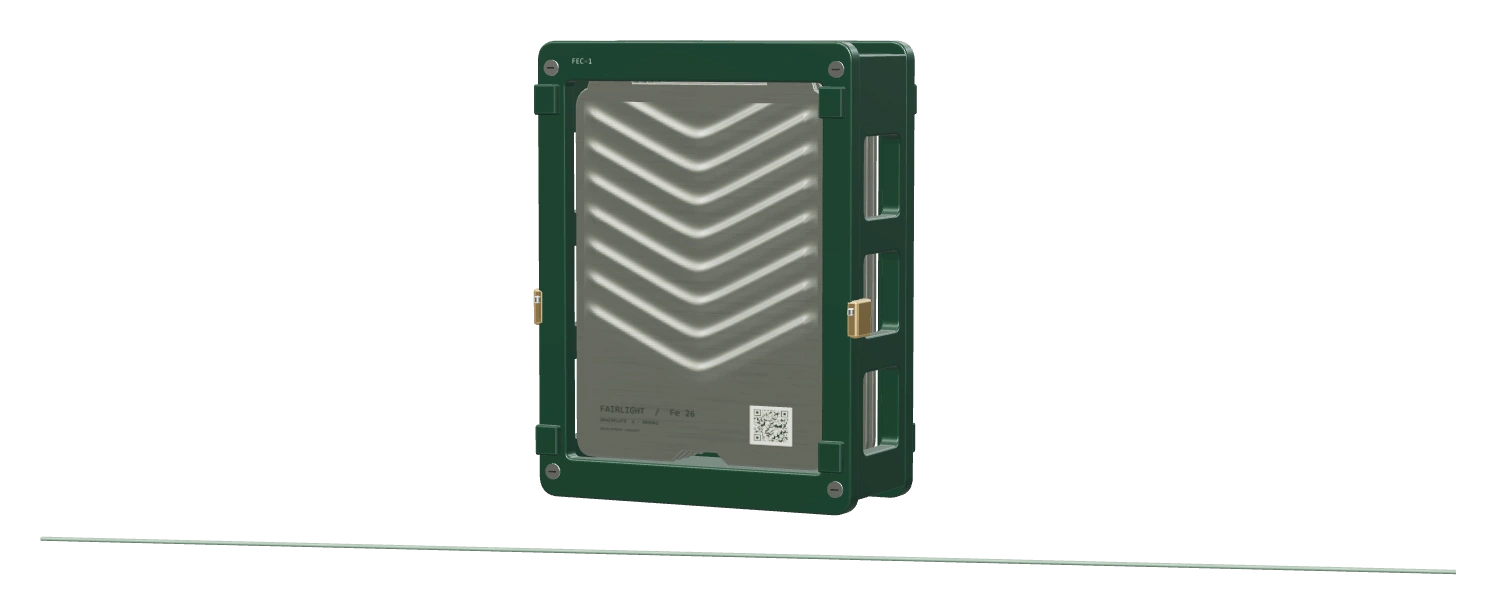
Industrial PV hub
Surplus production near a source of low-value or curtailed energy.
A proposed operating model. Fairlight Exchange is not yet a trading or transport service.
Moving energy only makes sense when the value exceeds the logistics. Fairlight is designed for local and regional exchange, not for replacing transmission lines with trucks.
- 0–50 kmStrongest early exchange zone
- 50–100 kmUse-case dependent
- Long distanceOnly high-value applications
Economic development hypothesis—not a product limit.
Charge where energy is abundant
Commercial rooftops and industrial sites may produce more electricity than they can absorb—or feed it out at near-zero value. A shared processing hub is intended to charge standardized carriers near that surplus.
Move a recognized object
Preserved carriers would move through familiar pallet logistics. Optical identity could link each custody transfer to a signed lifecycle record. Transport classification, packaging and handling protocols remain to be established.
Why local first
Moving energy only makes sense when the value at the destination exceeds the energy loss, handling and transport combined. Fairlight Exchange is therefore being developed around short-distance, high-value movement—a commercial roof to nearby users, an industrial site to a remote facility, a municipal reserve—not replacing transmission lines with trucks.
A system to build together
Lending, leasing and local exchange are proposed operating models, not currently available services. Certification, state-of-energy verification, settlement and liability need common rules before an exchange can operate.
Explore the detail.
Version 0.1 documents are prepared for a future public release. Contact Fairlight for publication updates.
Exchange Custody & Energy Certification Protocol
The proposed relationship between custody and energy state.
v0.1 · Awaiting public releaseAsk about this document